Restoring Weathered Shells.
There’s something strangely addictive about collecting shells. Not the perfect polished tourist-shop kind…the weathered ones. The ones half buried in sand, worn soft by tides, sun-bleached, chipped, broken or covered in years of build-up. The ones that feel like they've actually lived in the ocean and hold a story.
Over time I've ended up with jars, trays and pockets full of them. Tiny cone shells, coral fragments, worn cowries and strange little spiral pieces I still can't identify.Some stay exactly as they are, salt-stained and rough around the edges whilst others deserve a second look.
One thing I've learnt while beachcombing is that some shells hide incredible colours and textures beneath years of weathering and calcium build-up. And while acid washing shells is definitely a touchy subject in the collecting world, I've personally found that when done carefully, respectfully and safely, it can completely transform old beach-worn finds without stripping away their character.
This isn't about making shells look fake or overly polished…I actually prefer them imperfect. It's more about gently revealing what was already there.
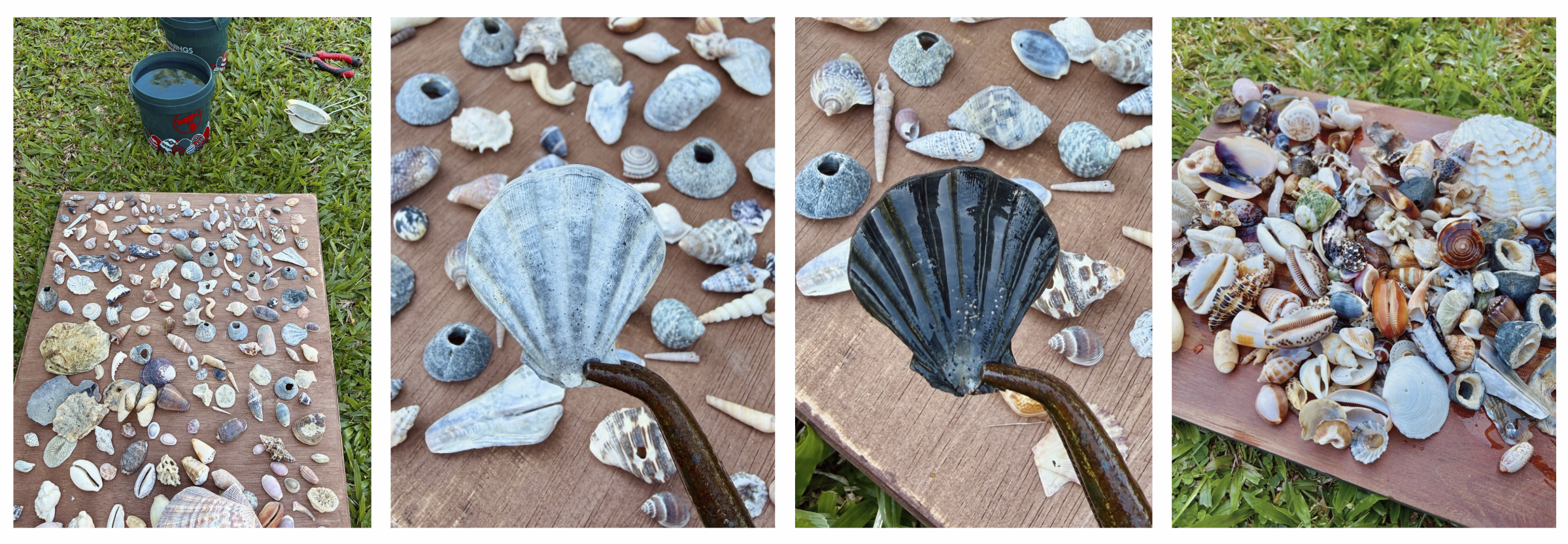
A Quick Note Before Starting
This process uses diluted muriatic acid (hydrochloric acid), which should always be treated seriously. It's not something to rush into or attempt indoors on the kitchen bench.
Some collectors are completely against acid washing, and honestly, I understand why. Used incorrectly, it can absolutely ruin shells. Certain fragile species should never be treated this way, and overdoing it can remove natural texture and detail very quickly.
But in my experience, when used lightly and intentionally on suitable shells, it can help restore heavily weathered finds that may otherwise stay hidden in a jar forever unnoticed.
If you decide to try it yourself:
Always work outdoors
Wear gloves and eye protection
Avoid breathing fumes
Keep pets and children away
Never mix chemicals
Always add acid to water, never water to acid
Please use common sense and do your own research before attempting anything yourself.
What I Use
My setup is fairly simple:
Muriatic acid (hydrochloric acid) Diluted Three parts water to 1 part acid
2 plastic containers or buckets (higher sided is better)
Gloves
Eye protection
Fresh water
Baking soda for neutralising ( I like to also add a little lemon juice)
Old tongs, pliers or plastic tools
I like to work in small batches and keep everything heavily diluted.
My Process
First, I rinse the shells thoroughly to remove loose sand, salt and debris.
From there I inspect each shell individually. Not every shell should be acid washed. Some are too fragile, some already have a beautiful natural patina and some honestly just look better left alone.
For suitable shells, I prepare a diluted acid mixture outdoors. The shells only stay submerged very briefly… sometimes just seconds. It all depends on the type, condition and amount of build-up.
You can usually see the reaction happening almost immediately as surface deposits begin lifting away. Once they've reached a point I'm happy with, I remove them straight away and rinse thoroughly in the fresh water that has a little baking soda for neutralising.
The biggest thing I've learnt is simple:
Less is more! It's very easy to go too far. I'm not trying to create glossy souvenir-shop shells. I still want them to feel ocean-worn and real.
The Part I Love Most
Honestly, my favourite part is seeing details emerge that were hidden before…soft pinks, tiny patterns, unexpected textures, spirals and little marks of history that had disappeared beneath years of build-up.
Some shells come out looking almost completely unchanged whilst others suddenly feel alive again. It's a reminder that beauty is often found beneath the surface. And whether people agree with the process or not, I think there's something special about giving old coastal finds a second chance to be appreciated.
Final Thoughts
I think shell collecting naturally teaches you to slow down…to notice things, to look a little closer and to carry home tiny fragments of places you've been.
For me, cleaning and restoring shells has become part of that process too! its not about perfection, its about preservation.
Some shells I leave exactly as I found them…others, I carefully restore. Both tell a story.
Happy shelling.
Ebb